
Diesel vs electric mine buses
By the MineBus team — Bus Stop Sales & Service · 50+ years in Australian bus supply · Reviewed June 2026
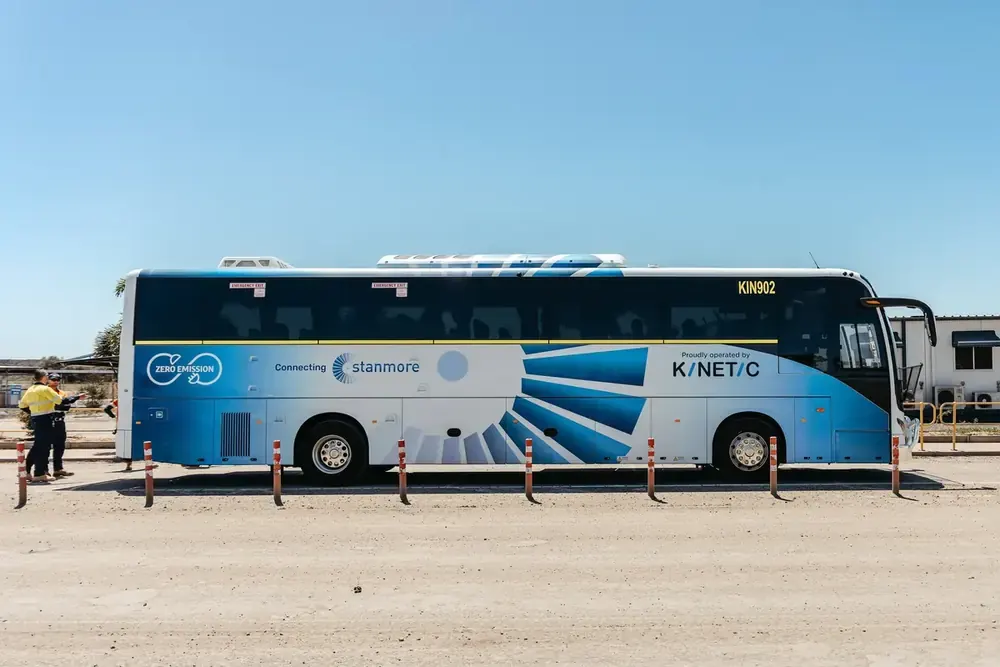
Electric mine buses are already carrying crews on Australian sites. Whether one suits your run comes down to the route, not the brochure.
The route decides it
Battery range derates in heat and on climbs. On short, repeatable shuttle runs with a depot at each end, electric already stacks up. On long FIFO transfers in 45-degree heat, diesel still wins on range and refuel time. Map it to your actual route before anything else.
Charging is infrastructure, not an accessory
An electric fleet needs depot charging, grid capacity or a genset, and a plan for how buses charge around the roster. That capex belongs in the comparison from day one, not as an afterthought.
Weight, payload and regen
Batteries are heavy, and that weight can trade against seats or payload. On descents, regen puts charge back and saves brakes — which counts on haul roads. A hybrid splits the difference where neither extreme fits.
Run the total cost, not the fuel bill
Electric shifts spend from fuel to capital and infrastructure. Diesel keeps it simple and flexible. The honest answer is per-route, and it's a total-cost question — we'll cost both against your run.
Frequently asked questions
Are electric mine buses viable in Australia?
Do electric buses have the range for FIFO?
Is electric cheaper to run?
Related
Spec your mine bus fleet
Tell us your site, commodity, roster and dates — we'll recommend the right bus, confirm the mine-spec equipment and price both purchase and hire.